

MD Create
What if surgeons and technicians could seamlessly collaborate through a platform that provides real-time communication and data sharing?
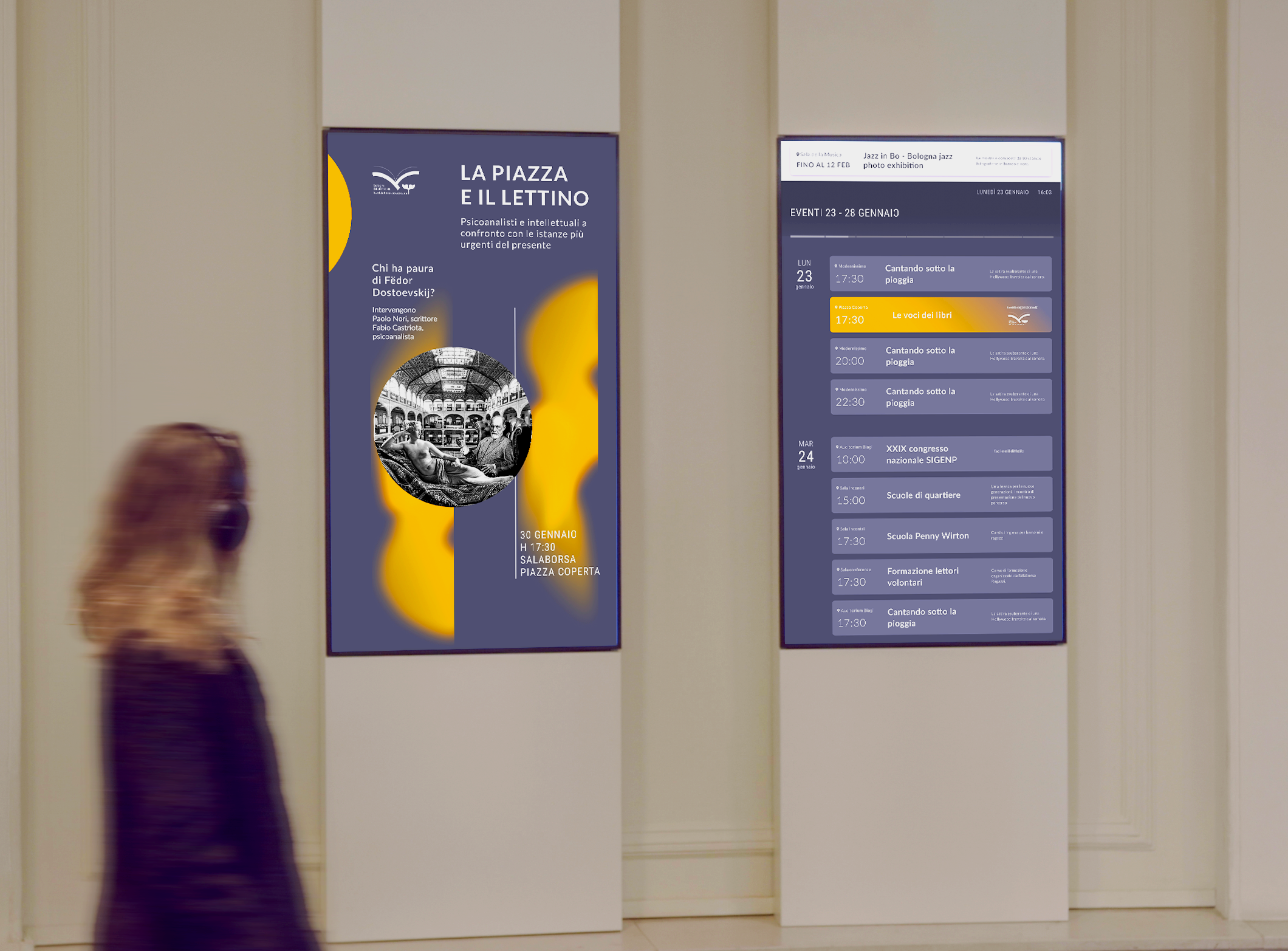
The institutions located within the Esedra and Cantone dei Fiori, two spaces pertaining to Bologna's Salaborsa Library, needed a new integrated communication system to inform users about their scheduled events and activities. Before the digital signage solution was implemented, communication was fragmented and not very effective at reaching users passing through the Esedra.
The aim was to create a single, harmonious and yet entity-specific communication that would make the most of the architectural spaces.
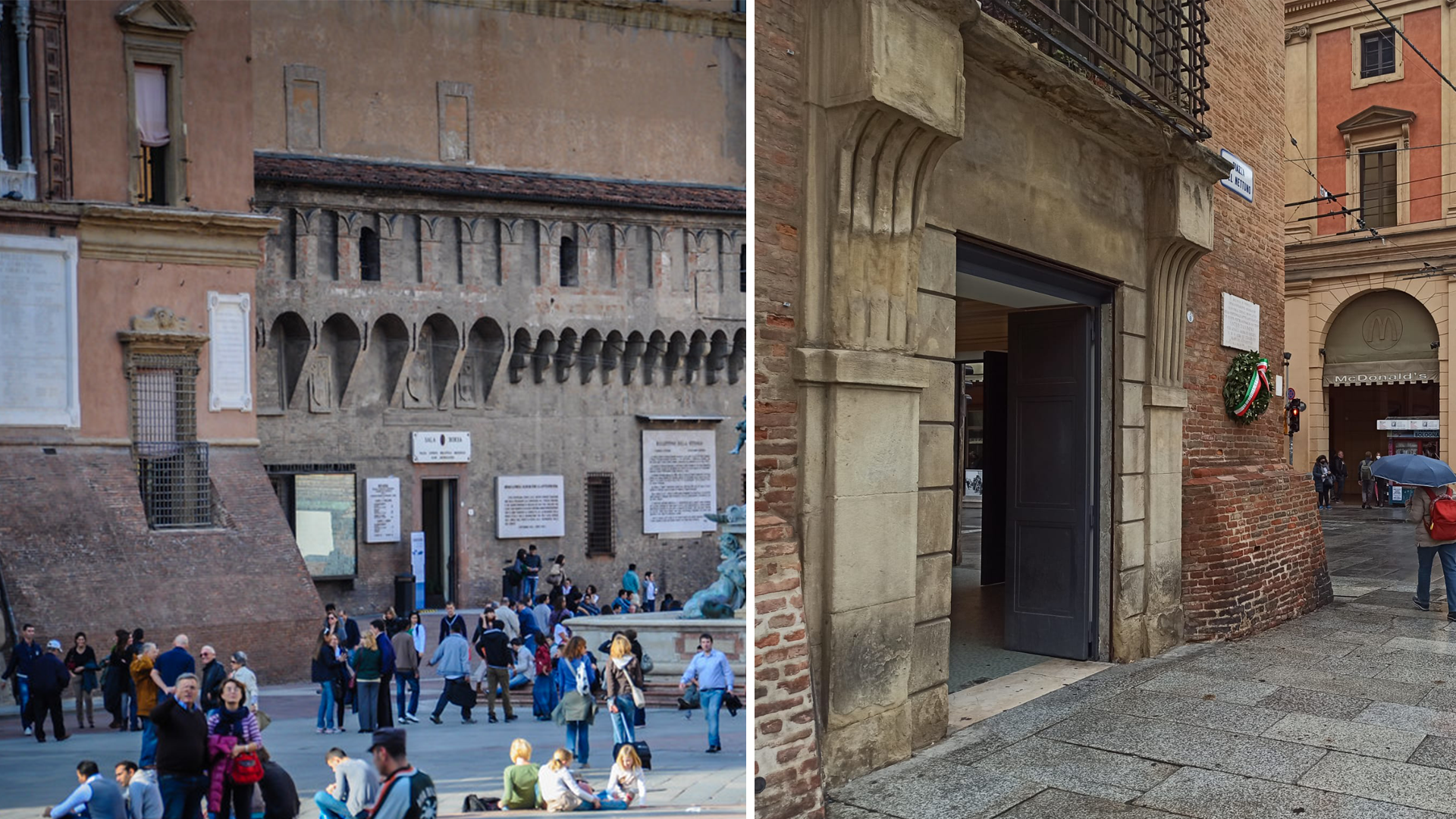
In the design phase, we analyzed the characteristics of the spaces (permeable and transitory by nature), the needs of the different types of public, the types of events and activities that needed to be communicated, and the requirements of the system users. The system features content tailored for each display, a user-friendly CMS, and a unified visual language.
For the Esedra entrance display, we created a dynamically updated daily calendar highlighting events and visually pinpointing their locations on a map. This provides visitors a clear overview upon entering. Displays further inside the Esedra show a weekly calendar and digital posters generated from the CMS entries.
The large display in the Canton dei Fiori shows a schematic map, with a focus rotating between the various venues hosting activities and events. This targeted approach optimizes communication for different spaces and public.
The CMS allows operators to quickly enter information, automatically generating content displays adapted to each screen.
A unified visual identity across all institutions' events helps create a perception of integrated communication for users. This harmonious yet entity-specific visual language makes the most architectural spaces.
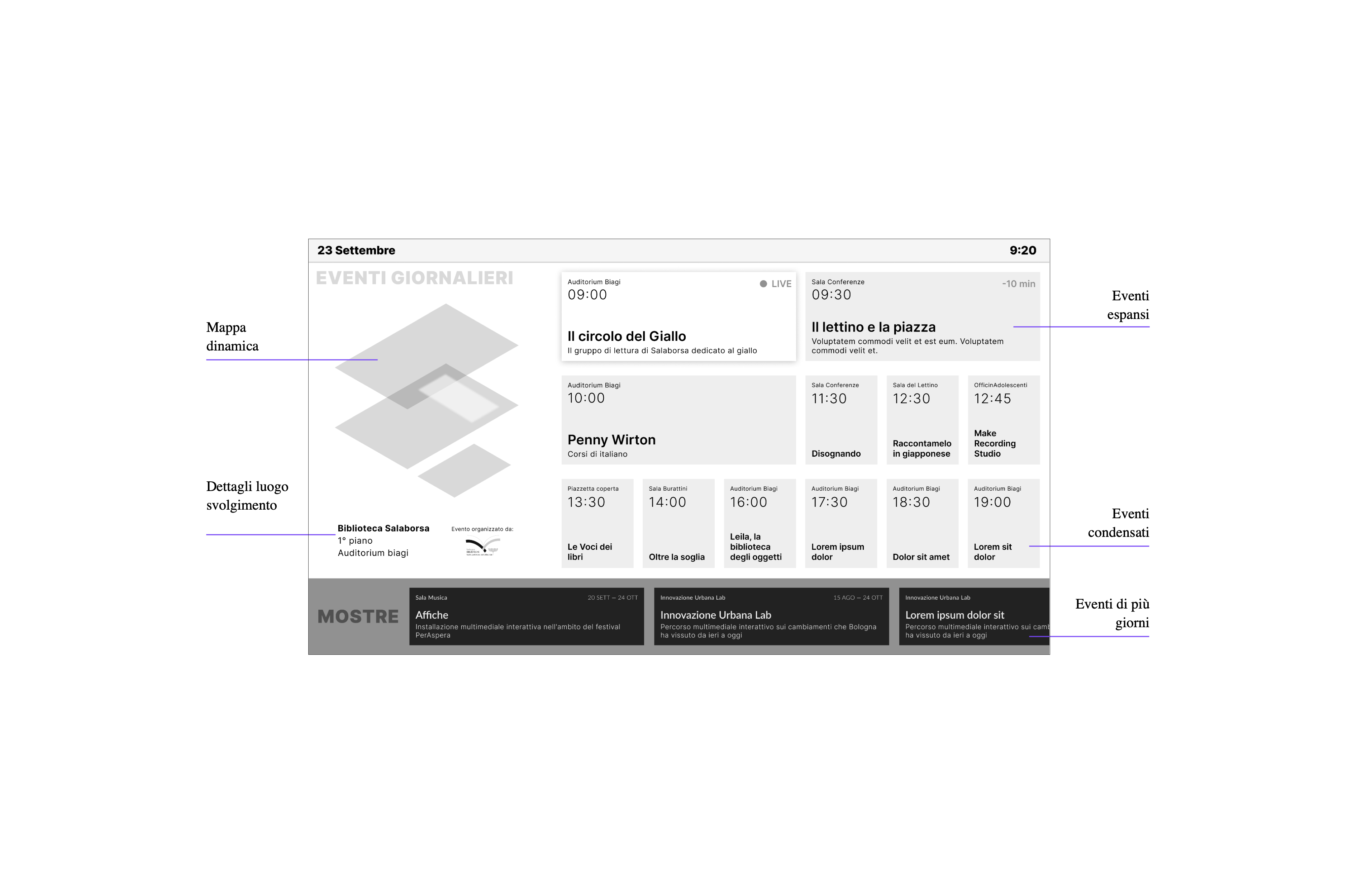
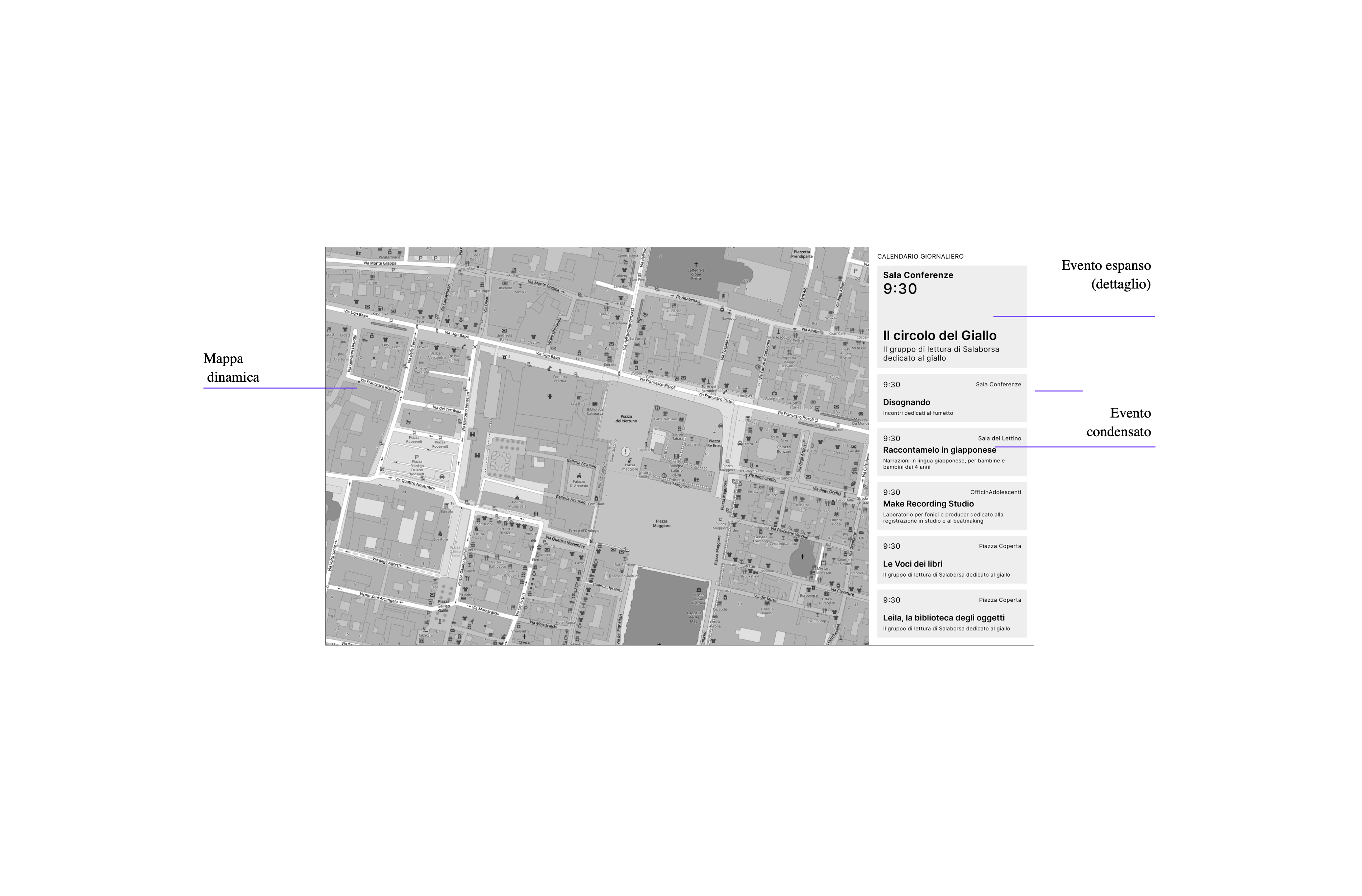
The digital signage system achieved good results, meeting its objectives:
Clients were satisfied, finding that the unified visual language and easy-to-update CMS effectively solved the initial problems of fragmented and ineffective communication. They appreciated how the system presents institutions' activities and events within a harmonious yet distinctive visual communication, optimized for each space.
Users transiting the Esedra and Cantone dei Fiori spaces now have a clear immediate overview of institutions' events through screen-specific content, addressing their original need.
The system allows institutions to easily update information about events, leveraging architectural spaces to communicate in an integrated and targeted way.
In summary, the system's ease of use and coordinated communication allowed the four institutions to significantly unify and improve their event communication. The results demonstrate how the tailored design of content for each display, combined with a user-friendly CMS and unified visual style, addressed institutions' initial requirements.
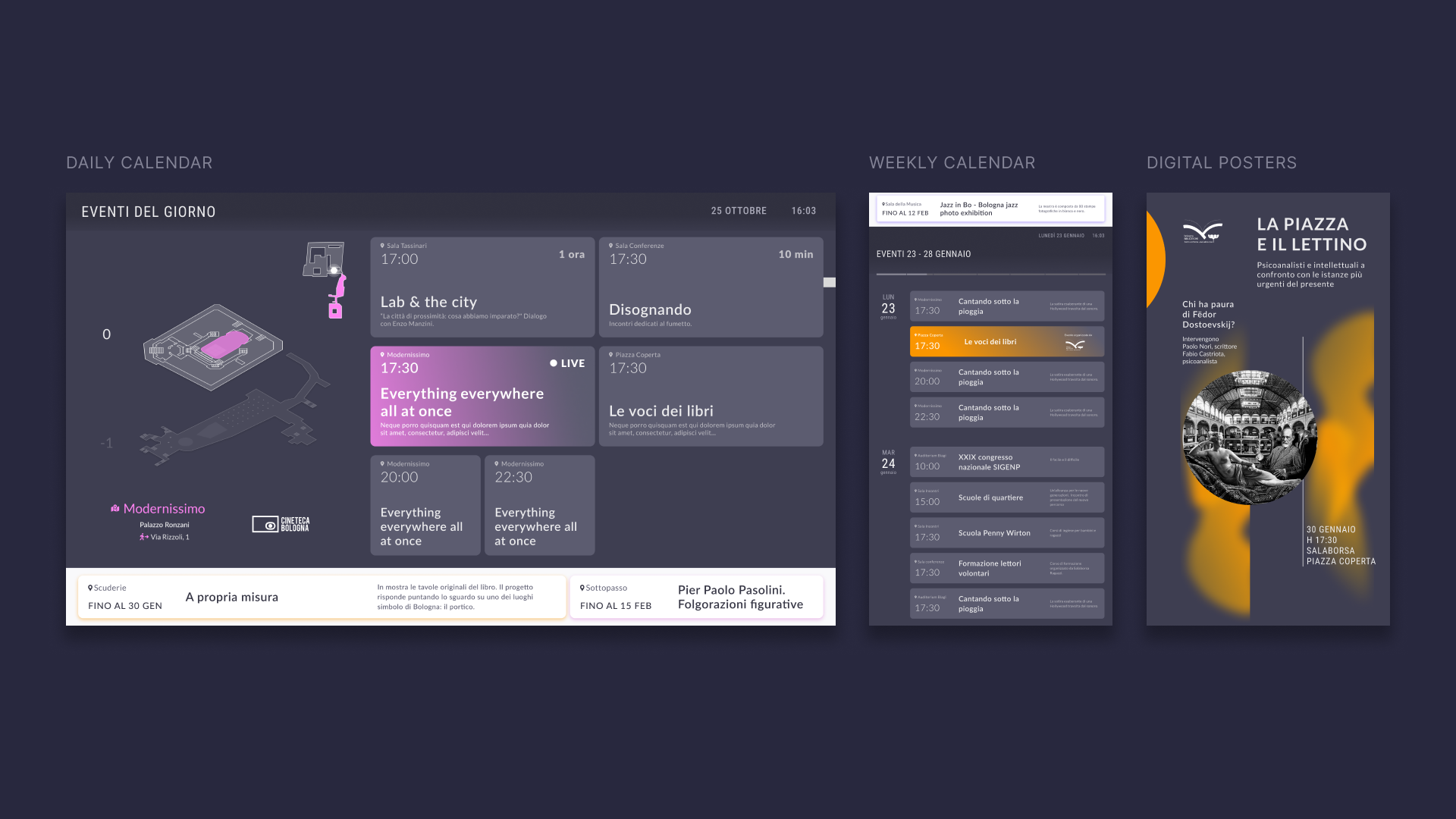
The key challenge was designing a framework, via a clear CMS and unified visual language respecting each institution's identity through color codes, to present the varied event types in a harmonized way.
Institutions had distinct formats/needs, from announcements to complex multimedia. Spaces/displays required customization for user profiles. The solution balanced a standardized graphic style/layout across communications, different color codes for each institution and content tailored for each display.
Future similar projects could benefit from embedding user-centered design practices from the start, with frequent checkpoints to validate the framework is adequately accommodating the distinct requirements of all stakeholders in an equitable manner.


.png)