Esedra & Canton dei Fiori
What if tailored digital signage system could help distinct cultural entities effectively coordinate their communication within shared spaces?

In maxillofacial surgery, doctors and technicians work closely together during pre-operative planning. By examining CT scans, they jointly decide on cutting zones and elements to remove. The technicians design and manufacture surgical guides for the surgeon.
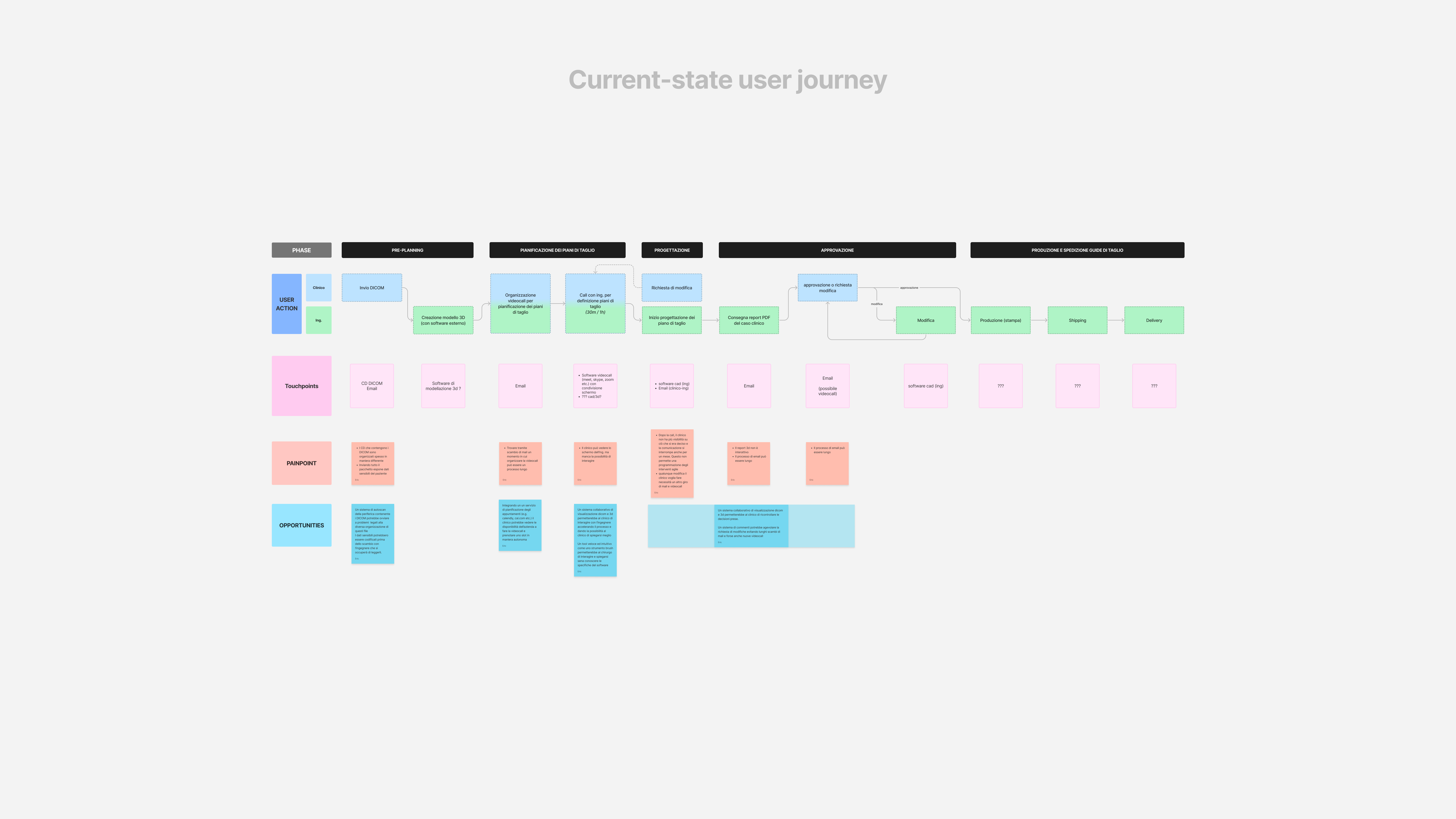
Currently this process often takes place remotely, using screen sharing software and video calling. However, these modalities have limitations: the surgeon becomes a passive observer and for any changes must contact the technician via email to arrange another video call.
The Polytechnic University of Turin has started a spin-off to develop a collaborative tool specific for this field and to create a startup that will provide these services filling this gap. My role has been to analyze the necessary functionalities for the collaborative tool and subsequently design it through wireframes and key mockups.
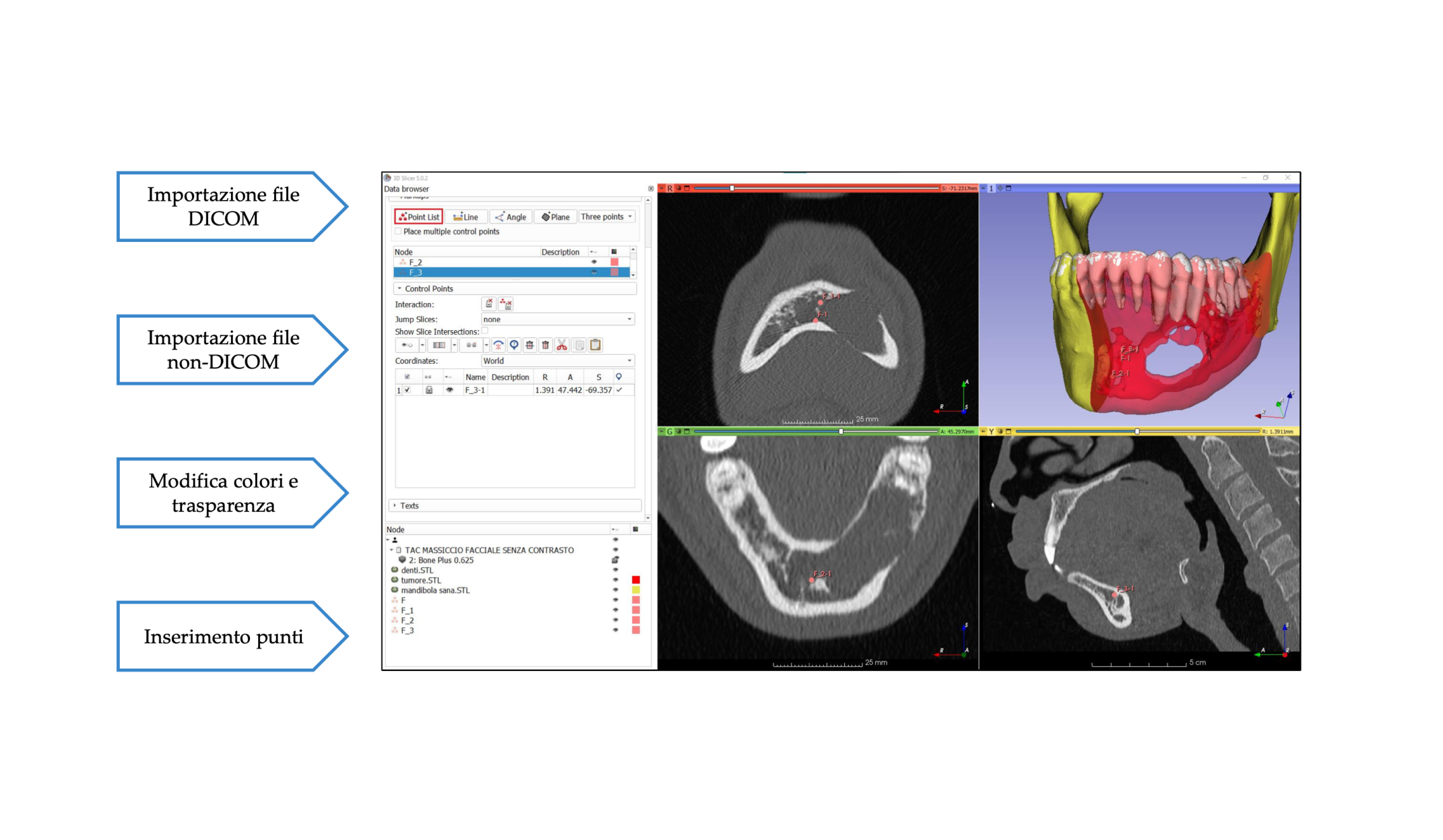
The analysis of the brief received from the Polytechnic University of Turin and, above all, interviews with doctors and technicians made it possible to map the current user journey of how this remote work is carried out, identifying critical issues to be solved.
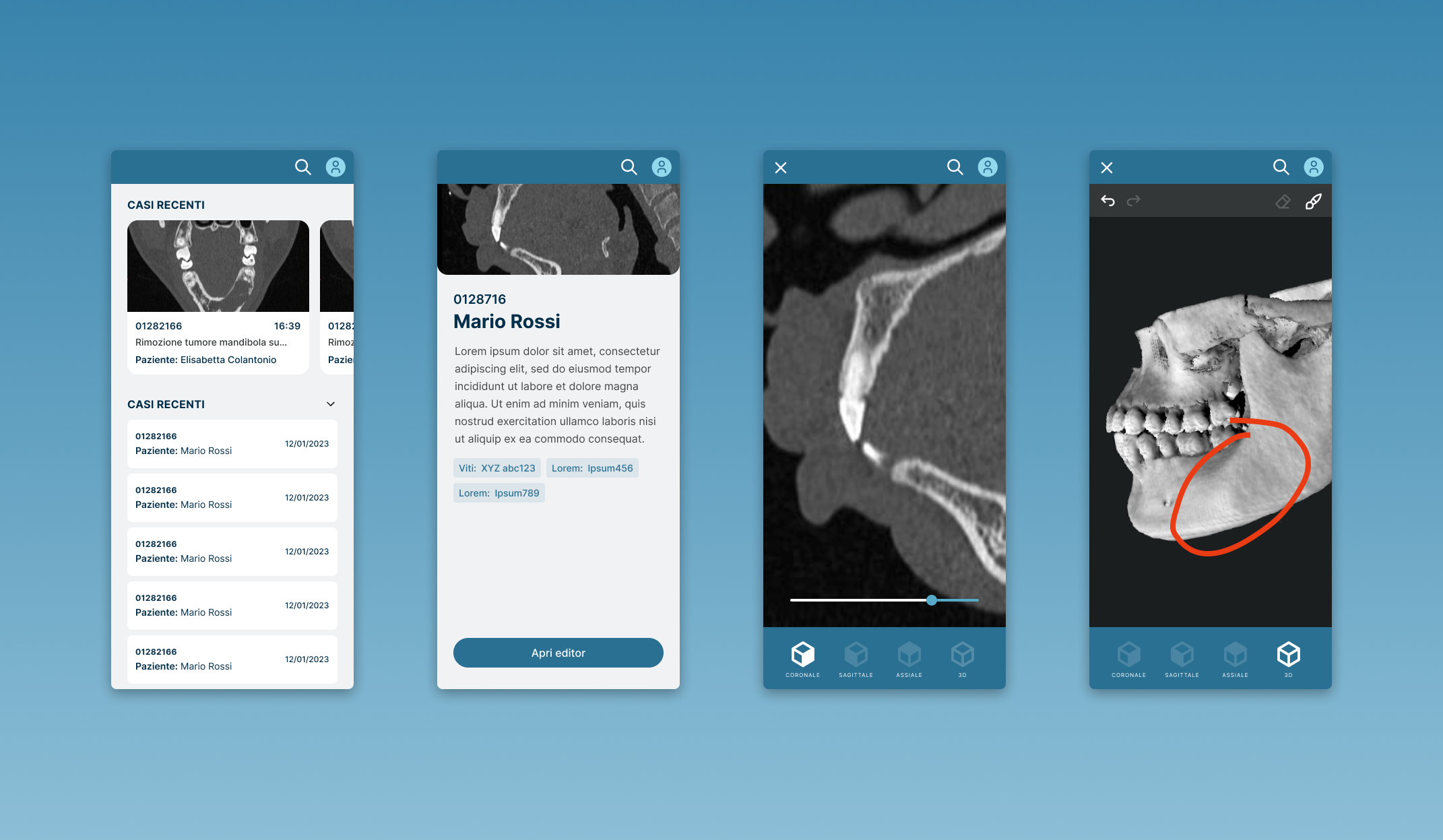
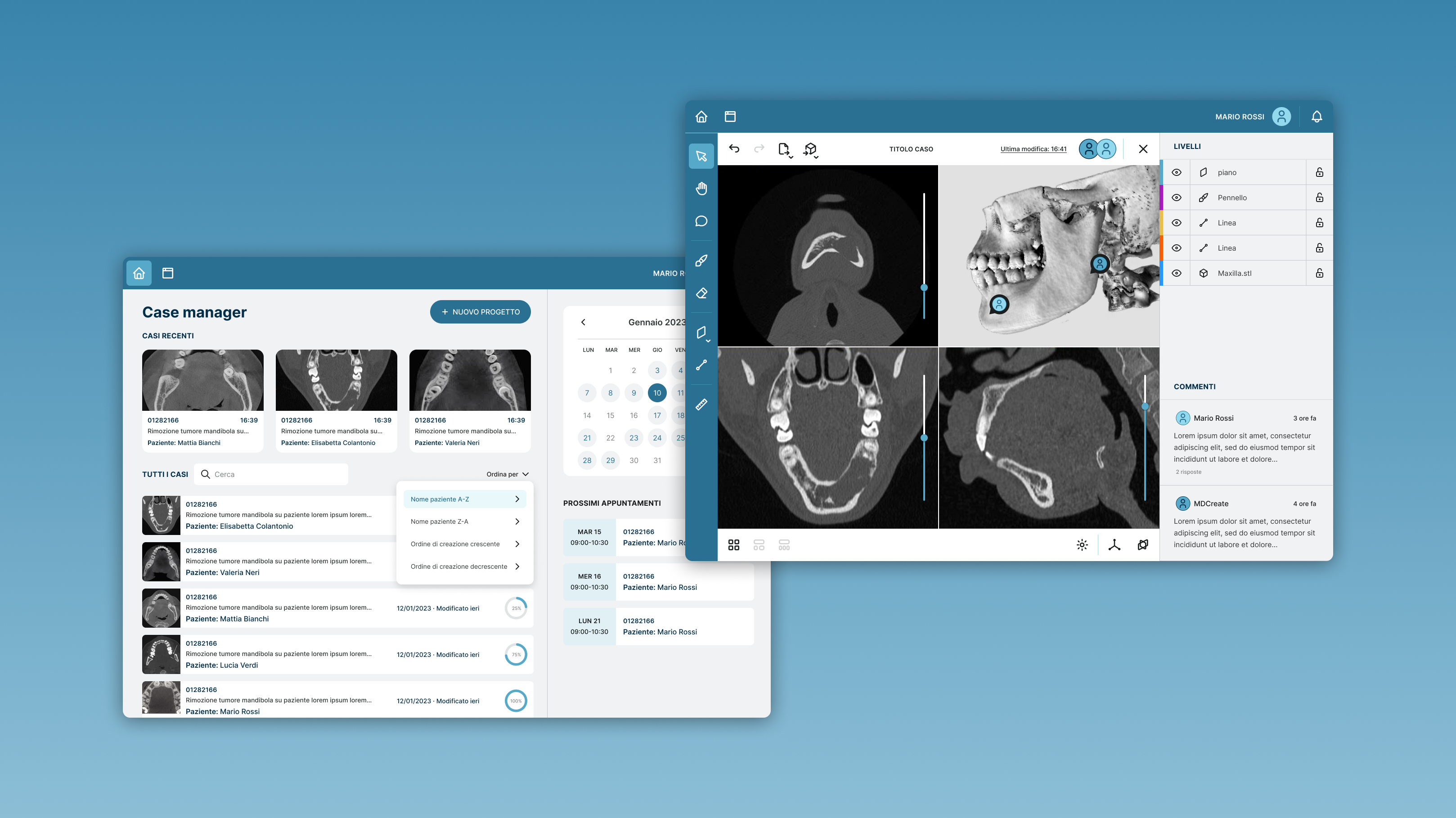
The interviews also provided the basis for creating a future-state user journey that allowed us to develop features such as: a case manager for patient cases, a system for sharing CT scans and 3D models, a tracking system for monitoring the progress of operation planning and surgical guides design in order to allow the doctor to always keep track of the progress of their cases, a collaborative editor with visibility of both users' cursors and a system of precise comments on the 3D model developed by the technician.
These functions were validated through multiple iterations of wireframes before being designed into key-mockups together with the UI design.
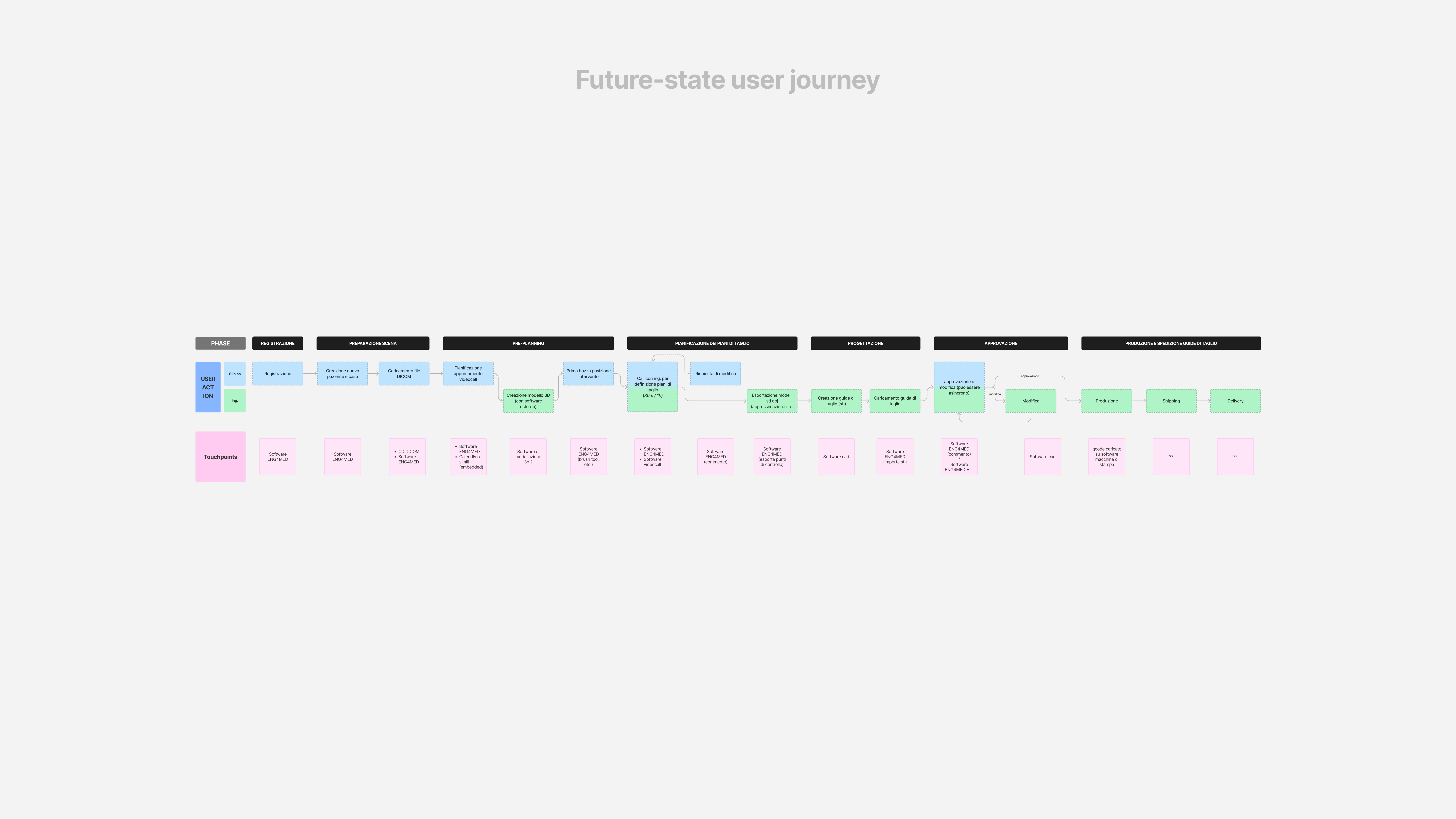
Preliminary evaluations of the proposed functionality with surgeons and technicians generated positive feedback, confirming that the identified solutions adequately meet their emerging needs.
However, the software has not yet been developed and fully tested with end users. Further iterations of prototyping, development and user testing will be needed before a validated product ready for market can be achieved.
At this stage, the main results are promising feedback on the identified solutions based on initial design concepts. Transformation of those concepts into a complete and validated software product will require extensive further work.
One of the main challenges was that every planning and operation is slightly different, making it difficult to define a typical workflow. Some cases are straightforward while others require multiple iterations and modifications. The cuts to be made also vary in complexity.
This means that there is no single typical journey for the work of surgeons and technicians. The design therefore had to opt for flexible solutions that do not "close" the process, in order to accommodate the variety of cases and needs.
Another challenge was that doctors, due to their commitments, need to be able to check cases from mobile or tablet devices. This led to the development of a simplified mobile and tablet version without particularly sophisticated editing tools but with the ability to draw on the viewport as if it were the pen tool in WhatsApp. The design aims to provide the essential information and some interaction capabilities on the go, while limiting more complex features to the desktop version.